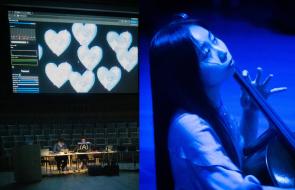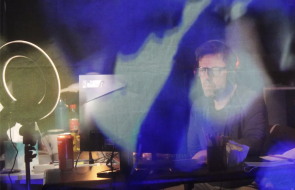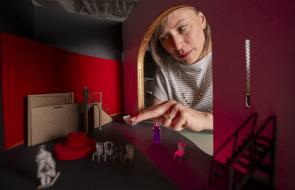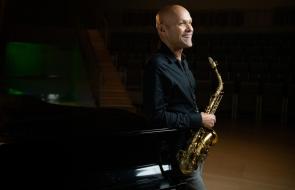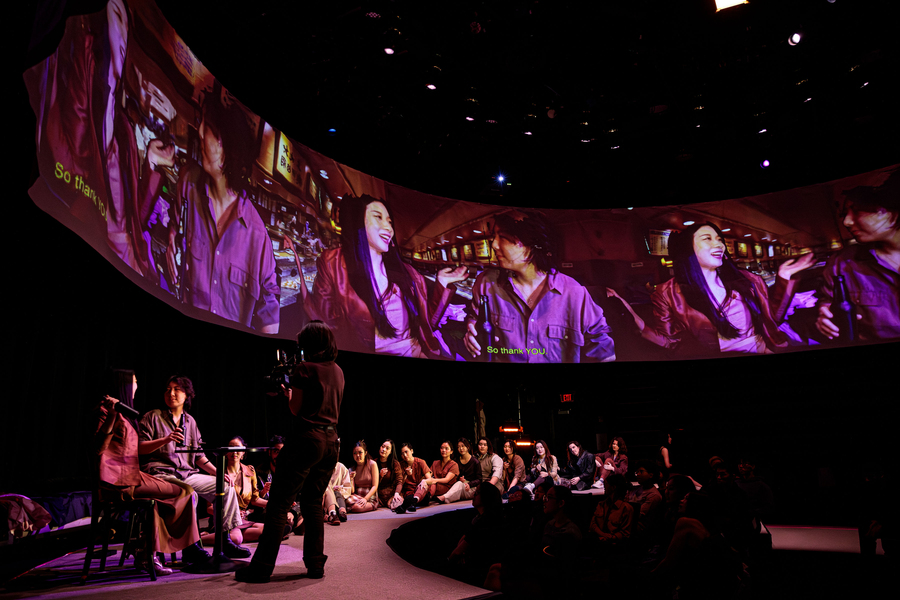
In class 21T.100 (Theater Arts Production), students are invited to join MIT Theater Arts faculty and staff in the development of a fully-staged production for an audience. Participants collaborate as performers, designers, writers, choreographers, and technicians.
“21T.100 sits at the pinnacle of our curriculum,” says Jay Scheib, section head for MIT Music and Theater Arts and the Class of 1949 Professor. “What's explored in our studios is put to the test in production — lighting design, scenography, performance, projection — and shared with the community.”
Weekly rehearsals, design labs, and workshops introduce students to an array of performance techniques over the course of the term, culminating in a public performance. The course is open to students at all levels of experience.
Each term evolves a different project that might include community-driven interventions, classical or contemporary plays, devised works, screenplays, musicals, or other live performance events.
For fall 2025, Scheib and his student and staff collaborators in 21T.100 took on playwright Stan Lai’s “A Dream Like a Dream 如夢之夢,” a play described as “a meteor of the Chinese contemporary theater told through the eyes of over 100 characters onstage, offstage, backstage, and beyond, from Shanghai to Paris and back.”
“This is so perfect, because I’ve always wanted to know more about this show,” says Audrey Zhu, a first-year mechanical engineering major and actor in the play. “It was kind of a cool cultural exchange because it’s a Chinese play being performed in English.”
“As they say, experience is in the leap, and not the step,” Scheib continues. “The experience of working on “A Dream Like a Dream 如夢之夢” — from beginning to end — has been a deeply special leap.”
“‘A Dream Like A Dream’ depicts many specific people in a tumultuous world, quite similar to ours at the moment,” says Xinyu Xu ’25, an electrical engineering and computer science major who directed the play with Scheib. “People in the play react (ir)rationally, which lets us know that however we react is understandable.”