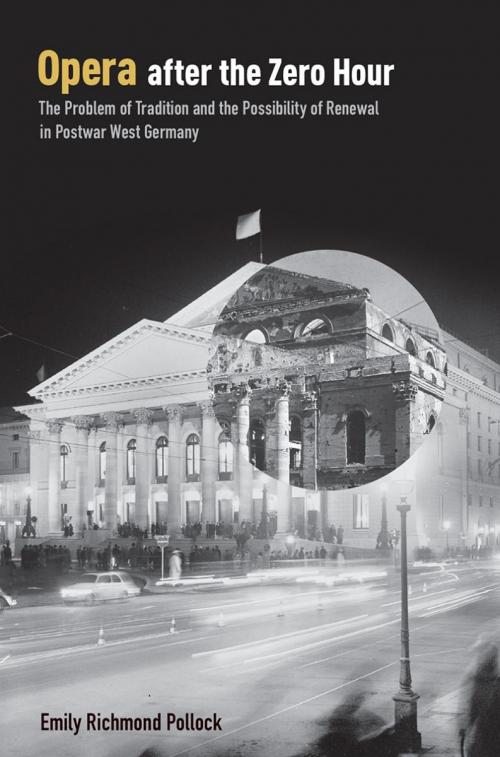
Emily Richmond Pollock’s book, Opera after the Zero Hour: The Problem of Tradition and the Possibility of Renewal in Postwar West Germany has been published by Oxford University Press.
The book presents opera as a site for the renegotiation of tradition in a politically fraught era of rebuilding. Though the Zero Hour put a rhetorical caesura between National Socialism and postwar West Germany, the postwar era was characterized by significant cultural continuity with the past. With nearly all of the major opera houses destroyed and a complex relationship to the competing ethics of modernism and restoration, opera was a richly contested art form, and the genre’s reputed conservatism was remarkably multi-faceted.
Pollock explores how composers developed different strategies to make new opera “new” while still deferring to historical conventions, all of which carried cultural resonances of their own. Read more here.